
Build Muscle & Lose Fat at the Same Time
For years, the fitness world has been divided into two camps: the "bulkers" and the "cutters." You were either eating everything in sight to put on size or starving yourself to see your abs. But what if you didn’t have to choose?
Enter Body Recomposition (or "recomp" for short).
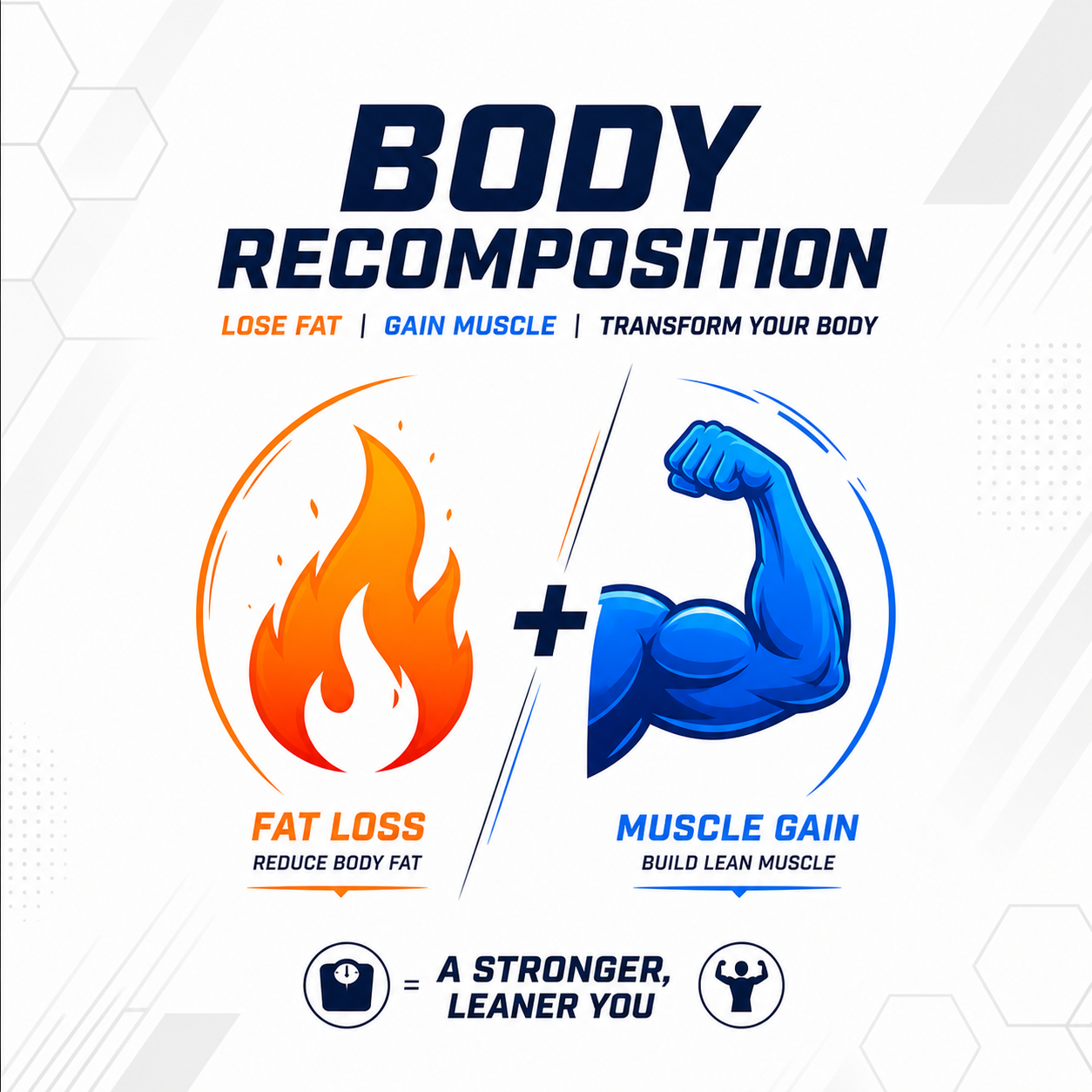
Body recomp is the process of losing fat and gaining muscle simultaneously. To many, it sounds like the "holy grail" of fitness, a myth reserved only for the genetically gifted or those brand new to the gym. But modern sports science tells a different story. With the right nutritional strategy and a smart approach to training, recomp is not only possible; it’s one of the most sustainable ways to transform your physique.
In this guide, we’re breaking down the science of how to pull off a successful body recomp, the nutritional "sweet spot" you need to find, and why your choice of protein can make or break your results.
What Exactly is Body Recomposition?
Most people judge their progress by the number on the scale. If the scale goes down, they’re "winning." If it goes up, they’re "losing."
Body recomp flips this script. Instead of focusing on weight loss, the goal is compositional change. You are trading fat tissue for muscle tissue. Because muscle is significantly denser than fat, you might find that your weight stays exactly the same while your clothes fit better, your waist gets smaller, and your muscles look more defined.
The Science of Simultaneous Change
To lose fat, your body needs to be in an energy deficit (burning more than you consume). To build muscle, your body needs a stimulus (weight training) and the raw materials (protein and energy) to repair tissue.
During a recomp, your body uses its own stored energy, body fat, to help fuel the muscle-building process. This is why recomp is particularly effective for those with a moderate amount of body fat to lose or those who are returning to the gym after a long break.
Finding the Caloric Sweet Spot
The biggest mistake people make when trying to recomp is going into an aggressive calorie deficit. If you cut your calories too low, your body won't have the energy required to recover from workouts, and your muscle-building efforts will stall.
To recomp effectively, you need to find your maintenance calories, the amount of energy you need to stay exactly the same weight.
If fat loss is your priority: Aim for a "slight" deficit of 10–15% below maintenance.
If muscle gain is your priority: Eat at maintenance or a tiny 5% surplus.
By staying near maintenance, you provide your body with enough energy to push hard in the gym while forcing it to dip into fat stores to make up any small energy gaps. This is a marathon, not a sprint. While a traditional "cut" might show results in three weeks, a true recomp often takes three to six months to really manifest in the mirror.
Protein: The Non-Negotiable Pillar
If calories provide the energy, protein provides the bricks. Without enough protein, your body cannot repair the micro-tears caused by resistance training, and you will simply lose weight (including muscle) rather than "recomping."
How Much Do You Actually Need?
Research generally suggests that for body recomposition, you should aim for 1.6g to 2.2g of protein per kilogram of body weight (roughly 0.8g to 1g per pound).
For a 180-lb individual, that’s about 145g to 180g of protein per day. That’s a lot of chicken breast. To hit these targets consistently, most fitness enthusiasts turn to supplements. However, the type of protein you choose matters more than you might think.
The "Heavy Shake" Hurdle
Traditional whey protein shakes are often thick, milky, and heavy on the stomach. For many busy professionals or those training in the heat, the thought of a creamy chocolate shake post-workout is less than appealing.
This is where options like clear whey protein isolate have changed the game. Because clear whey is filtered to remove the fats and sugars found in traditional whey, it mixes into a light, juice-like consistency.
For example, a serving of WheyUP provides 24g of high-quality protein in a refreshing format that feels more like a sports drink than a meal replacement. Plus, because it includes coconut water for hydration and a kick of caffeine, it’s a strategic tool for those trying to hit high protein targets without the "bloat" often associated with traditional dairy-heavy shakes.
Training for Growth: Progressive Overload
You cannot "eat" your way into more muscle; you have to earn it with tension. Resistance training is the signal that tells your body, "Hey, we need to keep this muscle and maybe build more."
For a successful recomp, focus on compound movements: exercises that use multiple joints and muscle groups simultaneously.
Squats & Lunges (Legs)
Deadlifts & Hip Hinges (Glutes/Hamstrings)
Push-ups & Bench Press (Chest/Triceps)
Rows & Pull-ups (Back/Biceps)

The key is progressive overload. This means doing more over time: more weight, more reps, or shorter rest periods. If you lift the same 20-lb dumbbells for the next six months, your body has no reason to adapt. Even in a slight calorie deficit, you should be striving to get stronger.
Curious about how to structure your gym time? Check out our 2026 Hybrid Athlete Guide for more on balancing strength and energy.
Practical Tips for the Busy Professional
Recomping is as much about lifestyle as it is about the gym. When you're balancing a career and a fitness goal, convenience is your best friend.
Prioritize Protein Early: Don't wait until dinner to play "catch up" on 100g of protein. Start your day with a high-protein breakfast or a light protein drink to stay ahead of the curve.
Monitor Your Energy: If you find yourself crashing mid-afternoon, you might need to adjust your protein and caffeine timing to keep your metabolism and focus high.
Sleep is Anabolic: You don't build muscle in the gym; you build it while you sleep. Aim for 7–8 hours of quality rest to allow your hormones to do the heavy lifting of fat oxidation and tissue repair.
Ditch the Scale (Mostly): Take progress photos and measurements of your waist and arms. The scale is a poor tool for recomp because muscle is so much denser than fat.
Final Thoughts
Body recomposition isn't a "get fit quick" scheme. It’s a methodical, science-backed approach to building a sustainable, athletic physique. By hitting your protein targets, staying near maintenance calories, and consistently challenging yourself in the gym, you can bypass the traditional "bulk and cut" cycles and simply focus on becoming a better version of yourself every day.
Keep it simple, keep it consistent, and don't forget to enjoy the process.