
Can Protein Help You Stay Hydrated?
We’ve all been there, halfway through a grueling leg day, your mouth feels like a desert, and you’re reaching for anything that promises to kill that thirst. Usually, that means a gallon of water or a neon-colored sports drink. But lately, there’s been a lot of buzz in the fitness community about protein and its role in hydration.
You’ve seen the "protein water" bottles popping up in gym vending machines and clear whey isolates replacing those thick, milky shakes. It sounds like the ultimate win-win, right? You get your muscle-building macros and stay hydrated at the same time. But is there actual science behind it, or is it just clever marketing?
Let’s pull back the curtain on the relationship between protein and hydration. Spoiler alert: it’s a bit more complicated than just "drinking protein keeps you wet."

The Science: Why High Protein Actually Wants Your Water
Before we get to the good news, we have to talk about how your body handles protein. Unlike fats and carbs, protein contains nitrogen. When your body breaks down protein to use for muscle repair or energy, it has to do something with that leftover nitrogen.
Your liver turns it into urea, which then travels to your kidneys to be filtered out of your blood and exited via... well, you know. This process is called solute excretion. Here’s the kicker: your kidneys need water to flush that urea out.
If you’re crushing a high-protein diet: which, let’s be honest, most of us at WheyUP are: your body actually requires more water than the average person. If you aren't upping your fluid intake alongside your protein intake, you might actually find yourself more dehydrated. That "dry mouth" feeling after a massive protein shake isn't in your head; it’s your kidneys asking for a refill to help process those gains.
So, Can Protein Help with Hydration?
If protein itself increases the need for water, how can we say it helps you stay hydrated? The secret isn’t in the protein molecule itself: it’s in the delivery system.
This is where "Protein Water" and clear whey isolates come into play. When you consume protein in a high-volume liquid form, you aren't just getting the 20g of isolate; you’re getting 16 to 20 ounces of H2O along with it.
The hydration benefit of a drink like WheyUP comes from the fact that it is, primarily, water. Because it's light and refreshing rather than thick and creamy, people are much more likely to drink it throughout their workout. This keeps a steady stream of fluids entering the system, offsetting the water required to metabolize the protein. It’s essentially "functional hydration."
If you’re curious about how this compares to your old habits, check out our breakdown on Why Athletes are Swapping Coffee for WheyUP. While coffee can be dehydrating in large amounts, a protein-infused water does the opposite.

The Clear Whey Revolution
For years, the only way to get your protein fix was a shake that felt like drinking a melted milkshake. While delicious, those aren't exactly "refreshing" when it’s 90 degrees out or you’re mid-sprint.
Clear Whey Isolate changed the game. By using a specific acidification and filtration process, the protein becomes completely soluble in water, resulting in a drink that looks and tastes like a juice or a sports drink rather than a dairy product.
This transparency is more than just aesthetic. Because clear whey is so light, it doesn't sit heavy in the gut. This makes it an ideal companion for hydration during active movement. For a deeper dive into why this specific type of protein is taking over, you’ve got to read our post Unveiling the Clarity: Exploring the Unique Benefits of Clear Whey Protein Isolate.
Electrolytes: The Real MVP of Hydration
We can’t talk about hydration without talking about electrolytes. To truly stay hydrated, your body needs a balance of minerals like sodium, potassium, and magnesium. These minerals help your cells absorb the water you drink.
Many high-quality protein waters: including what we do here at WheyUP: are formulated with these electrolytes. When you combine water, electrolytes, and protein, you’re creating a "super-liquid."
Water provides the base volume.
Electrolytes ensure that water actually gets into your cells.
Protein provides the amino acids necessary for muscle recovery.
It’s a triple threat. This is especially important for weight management and staying lean. If you’re looking to optimize your intake, see how Clear Whey Isolate helps with weight management.
Protein Water vs. Traditional Energy Drinks
You might be thinking, "Why not just drink a standard blue-raspberry sports drink?"
Standard energy and sports drinks are often loaded with sugar. While sugar can help with rapid hydration in extreme endurance scenarios (like marathons), for the average gym-goer or HIIT enthusiast, it’s often just empty calories that lead to a crash later.
Protein water offers a "slow-burn" benefit. The presence of protein can actually help regulate the absorption of fluids and nutrients, providing a more stable feeling of satiety and energy. Plus, you’re hitting your daily macro goals while you sip.
If you’re still reaching for those canned neon drinks, you might want to see our side-by-side comparison to see how much more you could be getting out of your beverage choice.
When Should You Drink It for Maximum Hydration?
To get the most out of the hydration benefits, timing is everything.
Intra-Workout: Sipping on a clear protein drink during your session ensures that you are replacing lost fluids in real-time while keeping amino acids in your bloodstream to prevent muscle breakdown.
Post-Workout: This is the critical window. Your body is screaming for water and repair. A protein-infused water hits both needs instantly.
On-the-Go: Let's be real, sometimes we just forget to drink water. Carrying a refreshing protein drink makes it more likely that you’ll actually stay hydrated throughout the day because it tastes better than plain tap water.
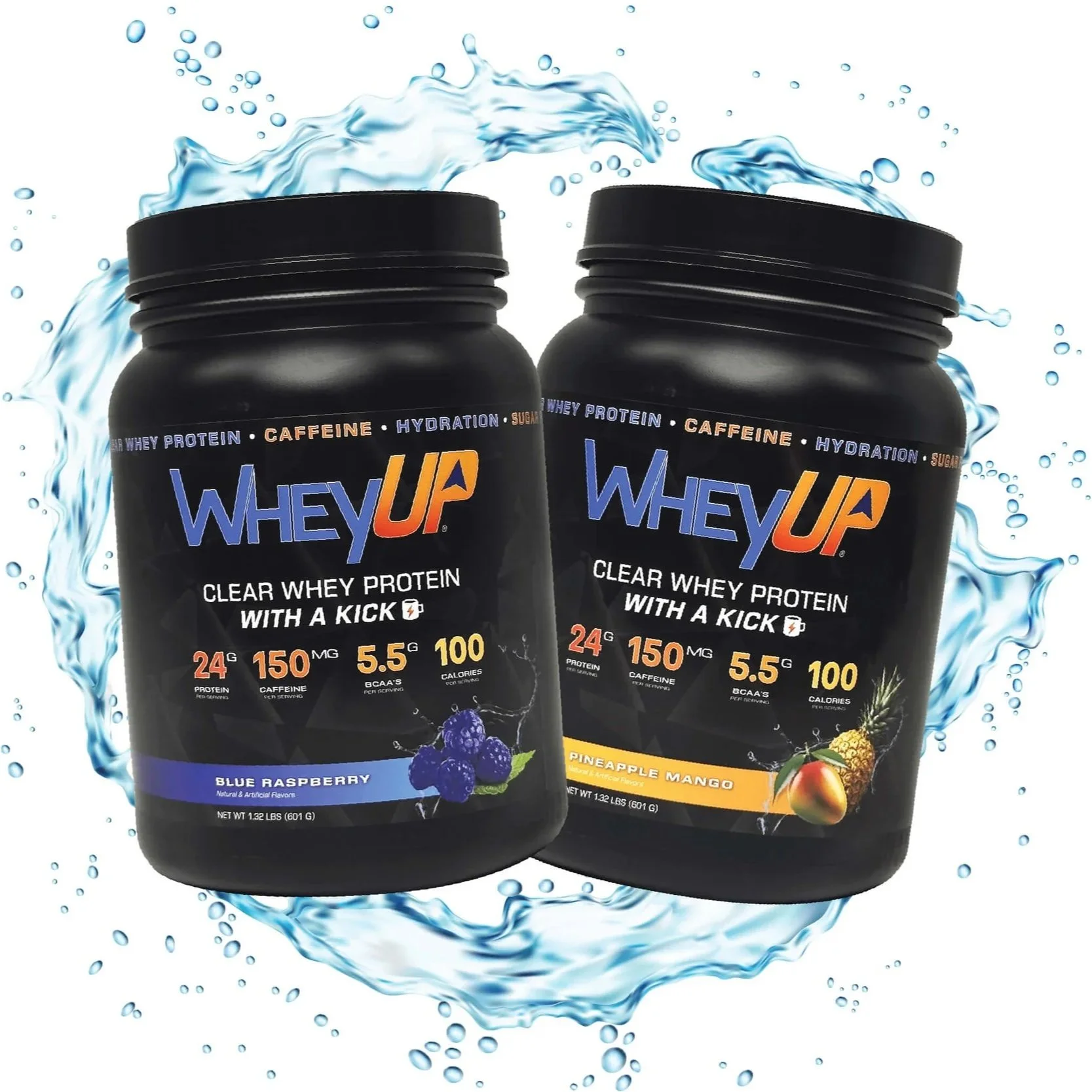
For those looking to mix things up, we even have recipes like the WheyUP Blueberry Spritzer that turn your hydration into a gourmet experience.
The Myth of the "Protein Diuretic"
There is a common myth that protein acts as a diuretic (something that makes you pee more and dehydrates you). While it's true that the kidneys use water to process protein, it is not a diuretic in the same way caffeine or alcohol is.
It won’t actively "strip" your body of water. It simply increases the demand for it. As long as you are drinking protein in a liquid-heavy format, you are meeting that demand as you go. It’s about balance.
How Much Should You Drink?
A good rule of thumb for active individuals is to aim for at least 0.5 to 1 ounce of water per pound of body weight daily. If you’re consuming a high-protein diet (over 1g per pound of body weight), lean toward the higher end of that scale.
If you find it hard to chug plain water, replacing one or two of those glasses with a WheyUP can make a massive difference. You get the 20g of protein, the energy kick from the caffeine (if you choose our caffeinated versions), and the hydration from the water base.
Speaking of that energy kick, have you checked out how protein plus caffeine can supercharge your sessions? It’s the ultimate combo for focus and fluid balance.
The Verdict
Can protein really help you stay hydrated?
The answer is a conditional YES.
Protein alone won't do the trick: it actually makes your body work harder for water. However, when delivered in a clear, water-based, electrolyte-rich format, protein becomes a powerful tool for staying hydrated. It encourages you to drink more, provides the minerals needed for cellular absorption, and fuels your muscles all at once.
Stop settling for thick, chalky shakes that leave you reaching for a water chaser. Switch to a hydration strategy that actually works with your body, not against it.
Ready to level up your hydration game? Explore our full range of clear whey options at the WheyUP Blog and find the flavor that keeps you coming back for more.
Stay thirsty, stay fueled, and keep crushing those goals. We’ll see you at the gym!